FAST-ED Stroke Scale
Use the FAST-ED scale as part of a rapid neurologic assessment for suspected stroke. Record the last-known-well time separately and follow your local stroke-alert and destination protocols.
F — Facial Palsy
Ask the patient to smile or show their teeth.
A — Arm Weakness
Ask the patient to close their eyes and hold both arms out for 10 seconds.
S — Speech Changes
Ask the patient to repeat a simple sentence.
E — Eye Deviation
Ask the patient to look from side to side and assess gaze.
D — Denial or Neglect
Assess for extinction, sensory neglect, or failure to recognize one side.
FAST-ED Score
0
Maximum FAST-ED score: 9
No FAST-ED findings selected
A score of zero does not rule out stroke. Continue a complete neurologic assessment and evaluate the patient’s history and last-known-well time.
Time Is Brain
Time is not assigned points in the FAST-ED score. Document the exact last-known-well time and activate the stroke system as early as possible.
FAST-ED Reference
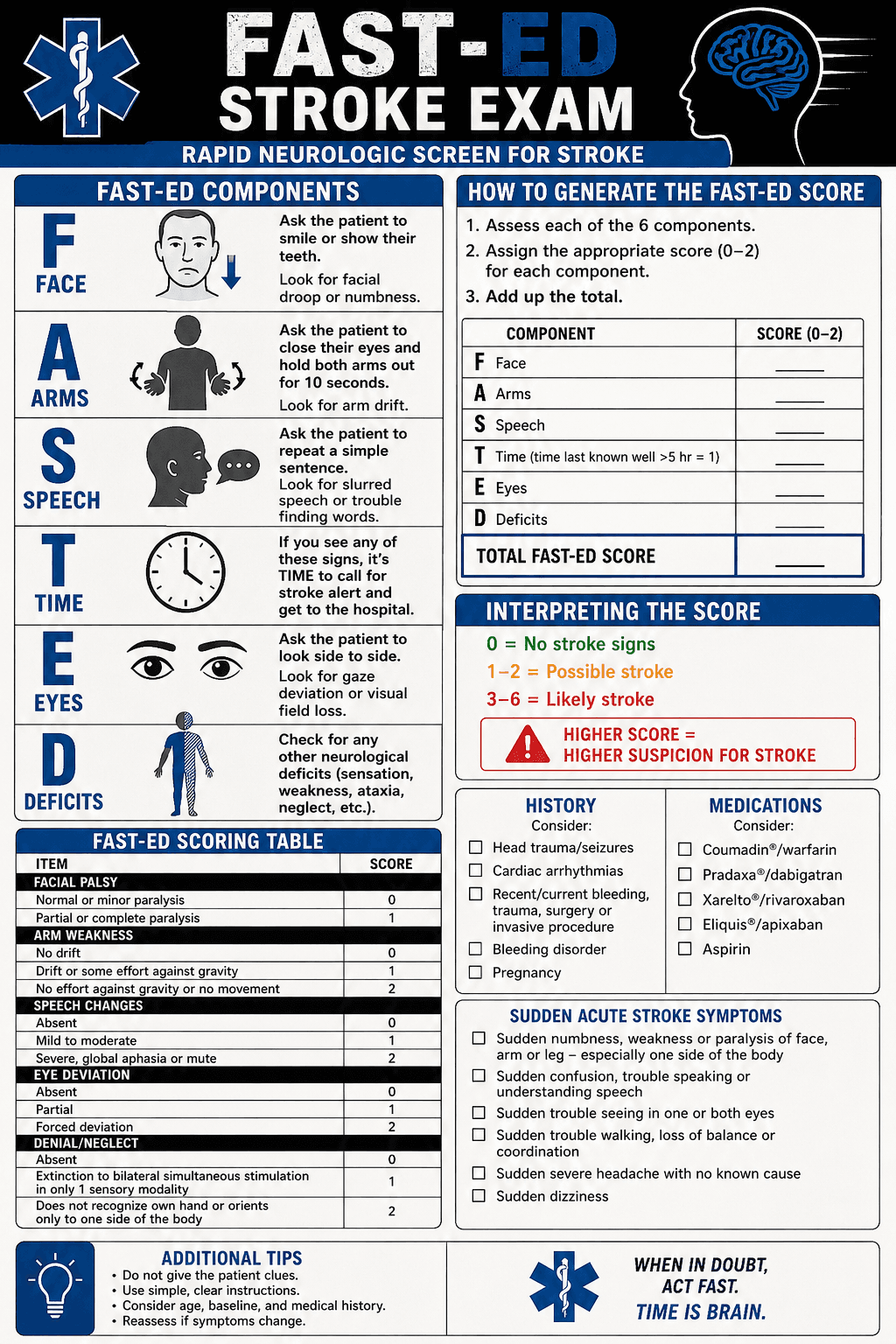
Use the infographic below as an educational reference while practicing the examination.
Important History
- Exact last-known-well time
- Head trauma or seizure activity
- Previous stroke or neurologic deficit
- Recent bleeding, trauma, surgery, or procedure
- Bleeding disorders
- Pregnancy
- Baseline mental and functional status
Medication History
- Warfarin
- Dabigatran
- Rivaroxaban
- Apixaban
- Other anticoagulants
- Antiplatelet medications
Clinical Safety Reminder
FAST-ED is a screening tool and does not diagnose or exclude stroke. Check blood glucose, assess for stroke mimics, perform a complete neurologic examination, determine last-known-well time, and follow your local stroke-alert, transport, and medical-control protocols.