Exposure
Cold air, wind, water, wet clothing, prolonged ground contact, and limited shelter can accelerate heat loss.
Massachusetts EMS Environmental Course
Adult and pediatric recognition, prevention of further heat loss, gentle handling, prolonged pulse assessment, rewarming support, cardiac-arrest considerations, and documentation.
Protocol
Massachusetts 2.8
Version
2026.2
Assessment
25 Questions • 80%
Section 01
By the end of this course, the learner should be able to:
Section 02
Review the Massachusetts hypothermia protocol before continuing.
Section 03
Hypothermia occurs when heat loss exceeds heat production and core temperature falls.
Cold air, wind, water, wet clothing, prolonged ground contact, and limited shelter can accelerate heat loss.
Age, illness, intoxication, hypoglycemia, exhaustion, and altered mental status may reduce the patient’s ability to generate or conserve heat.
As core temperature falls, the patient may develop impaired judgment, bradycardia, respiratory depression, dysrhythmias, and cardiac arrest.
Section 04
Initial care focuses on gentle handling and environmental protection.
Section 05
A slow pulse or respiratory rate can be difficult to detect.
Full 60-Second Assessment
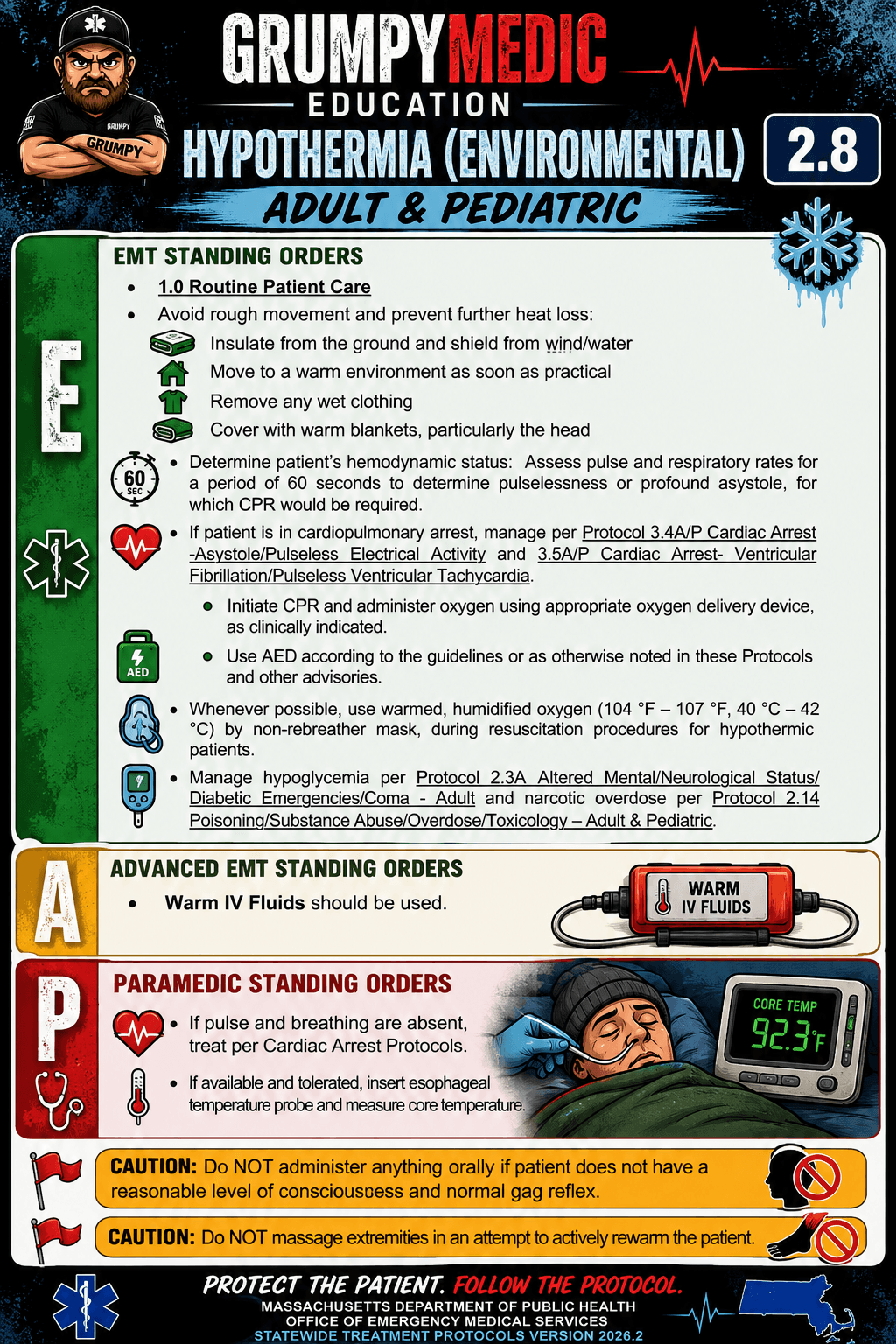
Assess pulse and respiratory rate for a full 60 seconds when determining pulselessness or profound asystole.
Section 06
EMT care emphasizes protection, oxygenation, arrest care, and correction of reversible threats.
Section 07
Advanced EMT treatment includes warmed vascular volume support.
Warm IV fluids should be used when vascular access and fluid therapy are indicated. Continue frequent respiratory and perfusion reassessment.
Section 08
Paramedic care adds core-temperature measurement when available and tolerated.
Treat under the appropriate cardiac-arrest protocols after confirming pulselessness with an appropriately prolonged assessment.
When available and tolerated, insert an esophageal temperature probe and measure core temperature.
Section 09
Hypothermic cardiac arrest requires disciplined confirmation and protocol-based treatment.
Section 10
Rewarming support should be controlled and focused on preventing further heat loss.
When possible, use warmed, humidified oxygen at 104–107 °F (40–42 °C) by non-rebreather mask during resuscitation.
Use warmed IV fluids for indicated vascular support. Continue monitoring perfusion, breathing, and response during transport.
Section 11
Avoid interventions that may increase aspiration risk or cause tissue injury.
Caution
Do not administer anything orally unless the patient has a reasonable level of consciousness and a normal gag reflex.
Caution
Do not massage the extremities in an attempt to actively rewarm the patient.
Section 12
Pause before opening each discussion.
An adult is removed from cold water, is confused, has wet clothing, and has a weak, slow pulse.
A profoundly cold patient appears apneic and pulseless after prolonged outdoor exposure.
A child is cold, lethargic, and has an uncertain oral intake history.
A bystander begins vigorously rubbing the patient’s arms and legs.
Section 13
The PCR should show exposure history, assessment, treatment, and response.
Section 14
Review these points before the final quiz.
Course Review Complete
The quiz contains 25 questions. A score of 80% or higher unlocks the completion certificate.
Begin Quiz